






12.17.11
Posted by Ryan Clark at 12:10PM

Temple Owls (6-2) at Texas Longhorns (8-2)
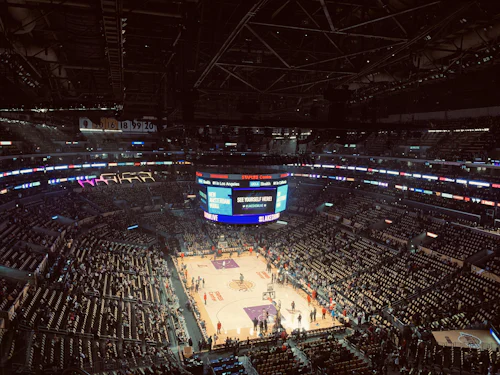
Frank Erwin Center | Austin, TX | Tip: 1:30 P.M. CT | TV: ESPN2
LRT Consecutive Game #197

Although Selection Sunday is still three months away, the Longhorns could be putting their tournament hopes on the line this afternoon. In the latest projection from ESPN’s resident bracketologist, Joe Lundardi, Texas was one of the first four teams out of the field, a result of a weak non-conference schedule that included a pair of losses against the only two quality teams on it.

Today, Texas kicks off the truly challenging part of its schedule, hosting Temple before heading to North Carolina and then opening conference play a week later. If the Longhorns are going to make the Big Dance this season, they will have to win their home games against other tournament teams like Temple.

Ramon Moore leads an experienced Temple team
(Photo credit: H. Rumph Jr/Associated Press)

By the Numbers

The Owls aren’t a flashy, exciting bunch, but they are well-coached and well-disciplined. In past seasons under Fran Dunphy, Temple has checked in as part of the bottom third in D-I hoops when it comes to tempo. This season, they’ve sped it up a little, but still only average 67 possessions per game, just off the national average of 67.3 possessions.

On offense, Temple is one of the most efficient teams in the land. They score 1.103 points per possession, the 25th-best mark in the country. The Owls do this by being patient and taking smart shots, which has led to a 52.5% effective field goal mark. That methodical approach also helps to protect the ball, as the Owls turn it over on less than 20% of their possessions.

Defensively, Temple likes to sit back in a man defense reminiscent of the pack-line defense. While there is less pressure on perimeter ballhandlers, the Owls certainly sag off on D, daring opponents to shoot. So far, it’s been very successful this season, with Temple opponents having an effective field goal percentage of 47.1%, below the national average. The Owls have been hurt by a late-November injury to big man Micheal Eric (No. 50), so in recent games, opponents have been able to find more success once they get the ball inside.

Meet the Owls

Without Eric and with senior Scootie Randall (No. 33) working his way back from a torn meniscus, the Temple rotation is very thin. They are essentially running a seven-man rotation, with only one player — 6’9″ redshirt freshman Anthony Lee (No. 3) — checking in over 6-feet, 6-inches.

Although the Owls have lost a lot of size without Eric, they still have a very tall, experienced backcourt. The steady ballhandler is 6’4″ Juan Fernandez (No. 4), a senior from Argentina who is averaging 12.5 points and 4.1 assists per game.

Fernandez uses his size to his advantage, often working smaller guards down the lane before hitting a running floater or a turnaround jumper off the blocks. He’s also just dangerous enough from the outside to keep defenses honest, knocking down 36% of his long-range attempts so far this season. Fernandez looks best from outside when catching the ball in rhythm and stepping into the shot, and he particularly likes to pop it from the right wing.

Joining Fernandez in the backcourt is the team’s leading scorer, senior Ramone Moore (No. 10). Moore is a slippery guard who can create his own shot on the dribble. He’s smooth with the ball cutting through traffic, but he seems most comfortable driving and curling to his left. Moore’s averaging more than 18 points per game and actually has more than four rebounds per game.

The third member of the guard troika is junior Khalif Wyatt (No. 1), the three-point marksman. Although he’s only made 35.5% of his shots behind the arc this season, he has range well past the NBA line and made more than 42% of his threes as a sophomore. He’s also an adept ballhandler, and can take over at the point when Fernandez needs a breather or is in foul trouble.

On the wing, junior Rahlir Hollis-Jefferson (No. 32) is a great rebounder and shot blocker. He also added a mindrange jumper to the repertoire this offseason, and it’s keeping defenses more honest. While Hollis-Jefferson isn’t always knocking that shot down from the opening tip, he’s more than willing to take it.

Injuries have forced Anthony Lee into a bigger role
(Photo credit: Chris Chambers/Getty Images)

With Eric out of the lineup, redshirt freshman Lee has been thrust into the starting five. He sat out last season with a herniated disk in his back, but had a great summer and is averaging nearly seven boards per game to go with five points. He’s not yet a post-up player, but he’s athletic and very active inside, so he cleans up the garbage and makes those all-important hustle plays.

Off the bench, sophomore guard Aaron Brown (No. 22) is playing roughly 14 minutes per game after starting the last nine games of his freshman campaign due to Randall’s injury issues. He has been the team’s most-consistent outside shooter so far, knocking down nearly 46% of his threes. On a team that can often go cold from outside, that kind of success rate truly stands out.

The final healthy member of the Temple rotation is 6’3″ T.J. DiLeo (No. 11). While he doesn’t stuff the stat sheet, DiLeo is a very scrappy player on defense, and is often found on the floor in the scramble for loose balls. He’s actually very quick with the dribble, but typically passes it off when he approaches the lane. On the season, DiLeo has attempted only 17 shots despite appearing in every game and averaging nearly 20 minutes.

Keys to the Game

1) Knock down shots – This would seem to be a fairly simple instruction, one that would be key to winning just about any basketball game. Make your shots, win the game. But against Temple, it’s even more important that Texas drill the looks they are given. The Owls are going to sit back on defense and force the Longhorns to take jumpers. If Texas can’t even do that, Temple has no reason to adjust their D. But if the Longhorns can prove they will hit jump shots, the Owls have to play a little tighter, the Texas guards can do more on dribble penetration, and the entire offense opens up.

2) Do work on the glass – Without Eric in the lineup, the Owls are similar in size to many of the low-major teams that Texas has faced in recent weeks. Texas can overcome that staunch Temple defense by grabbing offense boards and giving themselves easier second-chance looks inside, while they can stifle that smart, patient Temple offense by dominating on the defensive glass as well. Against a team that skews towards the slower pace of play, the handful of extra shots created or prevented by rebounding can be the difference in the game.

3) Score in transition – The best way to beat a sound defense is to never let it set up in the half court. While Texas doesn’t need to try to turn this into a track meet, the Horns do need to be looking up after Temple misses and trying to score easy points. Even in situations where the fast break isn’t there, pushing the tempo could allow things to open up in the secondary break, especially with the three-point shooters that the Longhorns have on the roster.

12.14.11
Posted by Ryan Clark at 10:44AM

Texas Longhorns 93, Nicholls State Colonels 40

The Longhorns wrapped up the easy part of their schedule in impressive fashion, running away with a 53-point victory over Nicholls State in front of 4,435 at the Erwin Center last night. Texas started slowly, as has become the norm this season, leading the Colonels by just 10 with 5:23 left in the first half. That was as close as Nicholls State would get, as the Longhorns finished the game on a torrid run, limiting their opponents to just 13 points the rest of the way.

Nicholls State couldn’t stop J’Covan Brown
(Photo credit: Michael Thomas/Associated Press)

It’s easy to look at the numbers and get far too excited about the results. While there were certainly quite a few things to make Texas fans giddy, they can’t forget just how bad Nicholls State is this season. As we pointed out in yesterday’s game preview, the Colonels came into the matchup as the 21st-worst team in Ken Pomeroy’s rankings.

What looked good

Even against an opponent as overmatched as Nicholls State, the defensive performance by Texas was noteworthy. The Longhorns held their opponents without a field goal for a stretch of 15:37 that started late in the first half, allowing just five free throws during that time frame.

While Texas was able to find success by making the Nicholls State shooters take long jumpers, they also eliminated possessions by forcing turnovers and dominated the defensive glass, keeping the Colonels from extending possessions after missed shots. Nicholls State was 0-for-18 from the field during the drought, were forced into nine turnovers, and grabbed just five offensive boards.

The turnovers weren’t limited to that lengthy period of stifling defense, either. Texas was consistently jumping the passing lane and starting fast breaks. On the night, the team caused 20 Nicholls State miscues, earning a turnover rate of 28.8%. The only other team to force more mistakes by the Colonels was Louisiana State, who did it in the season opener. Texas also took advantage of all of the errors, scoring 25 points off of the turnovers.

One way the Longhorns got the ball back was by drawing charges. By my count, there were at least five times that Texas players drew the offensive foul, and there certainly could have been more. This has been a noticeable trend this season, with J’Covan Brown and Alexis Wangmene being particularly fond of planting their feet and earning the whistle. It’s a dangerous game to be playing with such a short bench and the constant risk that the referees will call a blocking foul, but so far the Longhorns seem to have mastered the skill.

When not taking charges, J’Covan simply took charge, scoring 11 of team’s first 17 points. He added three assists and four rebounds on the night, and kept a few other rebounding opportunities alive for his teammates by racing in from the perimeter and tipping the ball away from a Colonel. Brown finished with 23 points, his fifth game of at least 20 points this year. Only two of those 20-plus scoring nights have come in the last seven games, though. The Longhorns have proven to be well-balanced, but they will need Brown to perform like this more consistently as the schedule gets tougher.

Myck Kabongo sliced up the Colonel defense
(Photo credit: Michael Thomas/Associated Press)

Freshman Myck Kabongo is also trending upward as the team heads into the end of the non-conference slate. He only took two shots all night — both three-pointers — but was constantly able to set up his teammates with excellent court vision and an array of passes. He posted an excellent eight assists against just one turnover, with half of those assists setting up three-pointers for his teammates. He even added one for the highlight reel, tossing an alley-oop to Clint Chapman on a fast break in the second half.

The Longhorns also had their first double-double of the year, and it came from the bench. Jaylen Bond had a career night, scoring 18 points while grabbing 12 boards. He was practically unstoppable inside, as he scored 12 of his points right after ripped down offensive rebounds.

Tempo-free stats allow us to look at Bond’s numbers on a level playing field against those who play more minutes, and the stats are staggering. His offensive rebounding mark was 31%, which surprisingly was only his second-best performance of the year. Against Sam Houston State, Bond snagged almost 39% of his opportunities. Unfortunately, there have also been six different games where the freshman failed to secure even a single offensive board. With Wangmene and Chapman still rebounding inconsistently, it would be huge for the Longhorns if Bond could find some consistency of his own and become a reliable presence on the glass as conference play begins.

Finally, the play of Sterling Gibbs must be noted, as the freshman guard was perfect from the field, drilling all five of his shots en route to 14 points. In East Rutherford, Gibbs looked frightened and lacked confidence against even the slightest pressure. Last night, his quick catch-and-shoot rhythm was flawless, and he showed confidence in attacking the defense. Gibbs has shown this level of poise in the last two games, and he’s seen a spike in his minutes as a result. If he can keep this up against real competition, his role this season is going to be much larger than most people imagined.

What needed work

While the Texas defense was absolutely dominant for the last half of the game, the team still had its struggles coming out of the gate. Nicholls State was able to get to the paint far too easily, oftentimes without the aid of a ballscreen for the driving player. Alexis Wangmene had a particularly rough night, finding himself out of position far too often, and that difficulty kept him on the bench for much of the night. Fortunately, the Longhorns made adjustments and kept the Colonels in front of them, forcing long jump shots for much of the second half.

Clint Chapman also had his own struggles in this game, missing a ton of short, point-blank shots. He was 2-for-7 from the field, with one of those makes coming on the alley-oop from Kabongo. While Chapman missed a lot of easy looks, he at least made up for it on the defensive end, setting a career high with five blocked shots in just 22 minutes.

Up next: vs. Temple (6-2); Saturday, 1:30 P.M. CT

12.13.11
Posted by Ryan Clark at 2:02PM

Nicholls State Colonels (3-6) at Texas Longhorns (7-2)
Frank Erwin Center | Austin, TX | Tip: 7:15 P.M. | TV: Longhorn Network
LRT Consecutive Game #196

The Longhorns wrap up the cupcake portion of their non-conference schedule tonight, hosting the Nicholls State Colonels in what amounts to a glorified exhibition at the Frank Erwin Center. Tempo-free stat maven Ken Pomeroy has the Colonels ranked as the 21st-worst team in the country, even after they picked up their second Division I victory last night against Louisiana-Monroe.

The Longhorns have made vast improvements on the defensive side of the ball since their two losses in East Rutherford, holding their last five opponents to an effective field goal mark of just 37.4%. Of course, it should be noted that those five opponents currently have a combined record of just 20-23, with 10 of their wins coming against teams not in Division I. No matter how good Texas looks tonight against Nicholls State, fans must temper expectations, as the first true test of the team’s progress will come against Temple on Saturday.

By the numbers

Having lost leading scorer Anatoly Bose to graduation and the National Basketball League of his native Australia, the Colonels are working with four freshman, two transfers, and just one senior. Understandably, the Colonels were picked to finish dead last in the East Division of the Southland Conference by the league’s coaches.

As predicted, the on-court product has been quite sub-par so far this year. Nicholls State is averaging a per-possession point differential of -0.187, a discouraging number that is fueled by a terrible defense. The Colonels are the sixth-worst defense in the country according to Pomeroy, giving up 1.125 points per possession, thanks in large part to the 55% effective field goal percentage they are allowing opponents.

As it was on Saturday night against Texas State, tonight’s match-up on the glass is perfect for the Longhorns. Nicholls State is one of the ten worst offensive rebounding teams in the country, while Texas has struggled to stop opponents in that department for much of the season. Recently, the Longhorns have shown improvement, but again it is important to remember our earlier point regarding the level of competition over the last few games. Against this small, poor-rebounding team, the Longhorns should put up some video-game type numbers.

It is also worth noting that the Colonels have had some issues with ball control during their first nine games. The team’s turnover mark is a troubling 22.9%, a number that puts them in the bottom third of D-I teams. While Rick Barnes has never built the Texas offense on turnovers and transition, it’s still likely that the Horns will enjoy some fast break points courtesy of Nicholls State errors.

Meet the Colonels

As we mentioned, Nicholls State is truly in the midst of a rebuilding year. With Bose gone, 6’5″ senior Fred Hunter was supposed to carry the scoring load. Unfortunately, a knee injury from last year took longer than anticipated to heal, and Hunter elected to redshirt this season in the hopes of having a stronger senior campaign in 2012-13 with a more experienced squad.

The Colonels have a core rotation of nine players, but could go deeper down the bench against Texas, as they just played last night against Louisiana-Monroe. Injuries have forced Coach J.P. Piper to be very flexible with his lineups, meaning that eight different players have seen the starting five so far this season.

Ben Martin (right) is Nicholls State’s only active senior
(Photo credit: Valentino Mauricio/Beaumont Enterprise)

The lone senior is Ben Martin (No. 4), a guard who averaged less than five points per game last season. Like Hunter, Martin has been dealing with his own injuries, having been limited to just four games so far this season thanks to back problems. The guard hasn’t improved his scoring mark this season, averaging just four points per game, but has upped the shooting percentage. After knocking down less than 32% of his shots last year, Martin has made 45.5% of them in his four games.

The other key player to be hobbled by injuries this season is 6’2″ guard Dantrell Thomas (No. 1), who has been sidelined by a deep calf bruise. After missing two games due to the injury, Thomas made a surprise appearance off the bench last night, scoring nine points in the final minutes to carry the team to victory. During the preseason, Coach Piper hoped that Thomas would be the one to make up for Bose’s departing points, but so far he is averaging just over eight per game.

The player who has carried the team so far is 6’5″ freshman Trevon Lewis (No. 23). Averaging more than 14 points per game, Lewis made a splash in his collegiate debut, leading the team with 19 points against LSU in the season opener. The freshman is also grabbing more than five boards per game, making him the leading rebounder on a team that has no players over 6’7″. Lewis is an athletic guy who has the ability to defend all positions, but will find that a difficult task against a much bigger Texas lineup tonight.

Joining Lewis on the wing is 6’6″ sophomore Chris Talkington (No. 11), who is second on the team in scoring with a 12.7 average. He’s been the team’s best three-point shooter so far, knocking down 43.8% of his 48 attempts. Lest fans think Talkington is simply a long-range specialist, he’s also been attacking the rim to the tune of a 46.4% mark inside the arc, while earning 30 trips to the line.

The other three-point threat for Nicholls State is 6’7″ freshman Lachland Prest (No. 2), one of three Australians on the team roster. Prest is one of the two tallest players on the Colonel roster, but his 41.9% success rate behind the arc is key to stretching out defenses. For Coach Piper’s five-out, motion-based offense, having bigs with a good jumper is critical.

That type of offense doesn’t really call for a true point guard, but 6’2″ freshman Shane Rillieux (No. 21) is one of two guards who essentially fill that role. His 20 assists are second on the team, but the freshman has also coughed it up 21 times so far this season. He’s a good perimeter defender that is also rebounding very well in his freshman campaign, as he’s currently second on the team with 4.4 boards per game.

The other guard facilitating the offense is sophomore Bryan Hammond (No. 3), who has a 2-to-1 assist-to-turnover ratio. His 8.6 points per game are third on the team, despite being relegated to the sixth-man role after Martin’s return.

Another player giving quality minutes off the bench is Sam McBeath (No. 15), the other “big man” for the Colonels at 6-feet, 7-inches. The Australian product is much more experienced than his fellow freshmen, as he’s currently 21 years old and has spent the last two years trying to gain NCAA eligibility. McBeath is averaging 7.7 points and 3.9 rebounds in his seven appearances.

The final player in the rotation is Jeremy Smith (No. 34), a 6’3″ sophomore guard who actually took a redshirt season after his freshman year. He plays considerably less minutes than the eight men ahead of him in the rotation, as he sees the court for just over 14 minutes per game. Smith has made an appearance in every contest, though, and averages nearly five points in his limited role.

Keys to the blowout

There’s absolutely no reason why the Longhorns should lose tonight, so for this game we have made a slight name change to this section of the preview.

1) Control the defensive glass – With nobody over 6’7″ on the opposing bench, the Longhorns should have no problems rebounding the basketball tonight. The Nicholls State offense is already rather pedestrian, so limiting the Colonels to one-shot possessions by grabbing the defensive boards will absolutely cripple their scoring chances.

2) Play sound team defense – The motion-based offense that Nicholls State uses will make it necessary for the Longhorns to communicate very well on D. If the Longhorns don’t, there will be quite a few plays where they simply lose a man on defense and give up an easy layup or wide-open jumper. While Nicholls State is not a powerhouse by any stretch of the imagination, playing against this type of scheme will be a good experience for the young Longhorn defense.

3) Attack the paint – Recently Texas has found great success by setting up their big men in position to score, whether it’s from good entries in the high-low game or from good drive-and-dish work by Myck Kabongo and J’Covan Brown. The Longhorns have a huge size advantage in this game, so there’s no reason why they shouldn’t consistently feed Alexis Wangmene, Clint Chapman, and Jonathan Holmes and pad their stats.

12.11.11
Posted by Ryan Clark at 9:14AM

Texas Longhorns 86, Texas State Bobcats 52

It was a one-sided affair at the Erwin Center on Saturday night, as Texas used runs of 26-4 and 29-10 to blow open the game against Texas State and cruise to an 86-52 victory. The Longhorns set season highs with 50% shooting from behind the arc and a 56.3% mark from the field.

What looked good

Julien Lewis led Texas with 19 points
(Photo credit: Michael Thomas/Associated Press)

The excellent shooting percentage was the result of the team executing especially well in the half-court. Texas found great success on pick-and-rolls, and also scored a nice chunk of points off of dribble penetration with kicks to the crashing bigs on the baseline. In the second half, great ball movement against a short-lived Texas State zone allowed the Longhorns to drill six three-pointers within four minutes of leaving the locker room.

Amidst all of the excellent looks and easy buckets, Julien Lewis had a career night. The freshman led the team in scoring with 19 points, making him the fifth different player to lead the team in the last five games. Lewis made four three-pointers and a pull-up jumper during the first six minutes of the second half to put the game definitively out of reach.

Although Sheldon McClellan didn’t follow up his breakout game against UT-Arlington with another scoring barrage against the Bobcats, he quietly chipped in 13 points to the winning effort. He had another excellent game rebounding from the wing, securing six boards, and added an excellent block from behind during a Texas State fast break. McClellan also earned a steal for Lewis by pressuring Texas State’s Vonn Jones to throw an errant pass. For his hard work, McClellan scored a layup on the ensuing break.

That type of team defense is what allowed Texas to build such an insurmountable lead. In the first half, the Longhorns absolutely stifled the Bobcats, limiting them to only three field goals and 13.6% shooting. Texas played solid help defense and frustrated Texas State into forcing challenged shots. The Bobcats had one stretch of more than 14 minutes in the first half without a field goal. Unfortunately, the Longhorn effort waned as the team’s lead ballooned to nearly 40 in the second half, or else we could be talking about this as one of the team’s all-time best defensive games.

Texas also had a great night on the glass, as was to be expected against a much smaller Texas State team. The Longhorns posted their second-best defensive rebounding number of the season, securing 72% of the Bobcat misses. Combined with the excellent team D, that dominant work on the defensive glass completely shut down Texas State. While Texas will not see many teams this small as they move into conference play, hopefully this outing will crystallize the importance of defensive rebounding for the youngsters.

It was also great to see confident, aggressive play inside from Wangmene. In the past, he was often bobbling passes or rebounds, but over the last few weeks, he’s doing a much better job controlling the feeds and going to the rack. As Wangmene said in the post-game presser, “Either I would get fouled, or I would make the basket.” He also did really good work on the glass and could have challenged for a double-double if not limited to just 20 minutes in the blowout. The senior finished with 11 points and nine rebounds.

Alexis Wangmene cracked double-digits in scoring again
(Photo credit: Michael Thomas/Associated Press)

Over the last three games, Wangmene is averaging 9.7 points and 5.7 rebounds in 24.3 minutes. The most telling stat, though, is his 78.6% shooting percentage over that stretch. The guards are finding him in good spots to set up easy looks, and the big man is finishing. While the Longhorns could use even more rebounding from Wangmene, what he is providing right now on offense is exactly what Texas needs from him.

Freshman Sterling Gibbs also played very aggressively coming off of the bench. Listed generously at just 6’1″, Gibbs had issues against taller, active defenders earlier this season. Against Texas State, he put the ball on the floor and attacked the paint, earning eight free throws as a result. He knocked down seven of them, setting a career-high in the process with nine points.

What needed work

Texas still looked flustered against any type of pressure in the backcourt, but Clint Chapman was especially discombobulated. This has been a recurring problem for the big man, and it’s something that will have to be addressed before Big 12 teams start gameplanning for it. Although Chapman can hold the ball high to avoid a steal, he consistently has difficulty finding an outlet against pressure and looks panicked as a five-count approaches.

It was also disappointing to see the Texas defense give up a lot of easy looks in the second half. While that lack of focus can clearly be attributed to the huge lead, it still can make you wonder if the team will maintain the attention needed to play all-out, suffocating defense for 40 minutes. For the Longhorns to be successful in Big 12 play, there’s no doubt that they will have to play sound team defense from tip-off to the final buzzer.

It’s also worth noting that while Texas was consistently executing in their half-court sets, the Horns were also forcing things at times. The team ended up with 16 turnovers, which equates to a miscue on more than 24% of their possessions. Most of those came from guards trying to thread the needle on the pick-and-roll when the passing lanes were closing. Brown and Myck Kabongo combined for six turnovers on the game, many of them coming this way. The Longhorns have to make sure that they are only taking what the defense gives them and not trying to push the envelope too much.

Up next: vs. Nicholls State (2-6); Tuesday, 7 P.M. CT

12.10.11
Posted by Ryan Clark at 3:12PM

Texas State Bobcats (6-2) at Texas Longhorns (6-2)
Frank Erwin Center | Austin, TX | Tip: 7 P.M. CT | TV: Longhorn Network
LRT Consecutive Game #195

The Texas Longhorns are back in action tonight as they renew their annual rivalry with nearby Texas State at the Frank Erwin Center. This is the 46th all-time meeting on the hardwood between these two schools, and this marks the eighth-straight year they have squared off. Texas has defeated Texas State a whopping 40 out of 45 times, with their last defeat coming all the way back in the 1937-38 season.

The Longhorns looked good in their last outing, riding the hot hand of freshman Sheldon McClellan to an 18-point win over UT-Arlington. Texas had five players in double-digit scoring and sank more than 48% of their shots from the field in the victory. Fans can look forward to even more offense tonight as the Longhorns squeeze in another tune-up before tougher non-conference tests at the end of the month.

By the numbers

Once again, Texas State is one of the fastest five teams in the country, an honor the team has held in each of Coach Doug Davalos’ first five seasons in San Marcos. The Bobcats actually played at the fastest tempo in all of Division-I basketball during the 2007-08 season, averaging more than 80 possessions per game. Although that number is incredible in its own right, it’s even more ridiculous that the Longhorns and Bobcats have averaged 81.2 possessions in their five match-ups since Davalos took over.

Last year, the Bobcats had a hard time scoring the ball. This year, their offense has improved slightly, but now their defense is one of the absolute worst in the country. Texas State is allowing 1.094 points per possession, a number that only puts them ahead of 16 other D-I schools in that department.

The Bobcats have one of the 25 worst free-throw rates in D-I, allowing their opponents one free throw for every two field goal attempts. Of course, they are also allowing opponents to knock down 40% of their threes and almost 45% of their shots, so perhaps allowing other teams to beat them one point at a time might not seem so bad in comparison.

Texas fans will like the fact that Texas State is one of the worst offensive rebounding teams in the country. The Longhorns have been equally bad on the defensive glass, so the rebounding battle on that end of the floor will be interesting. One would think that the bigger Texas frontcourt would be able to exploit their size advantage, but that hasn’t been the case so far this season against smaller teams.

Those poor offensive rebounding numbers are really killing the Bobcat offense, which is actually shooting at a 47% clip and is making 40% of their threes. Texas State is also controlling the ball very well, turning it over on just 16.6% of their possessions. That number is just outside of the Top 20 nationally, but it is even more remarkable when you remember just how fast they play the game. If Texas State could actually reclaim some of their missed shots, the offense would be incredibly efficient.

Meet the Bobcats

As is the case every year, Coach Davalos has a very deep bench that he uses liberally to keep fresh legs on the court. Nine different Bobcats average more than 14 minutes a game, with another four players on the bench averaging between seven and nine. If this game is played at the breakneck speed of the last five meetings, there is no doubt that the smaller Longhorn rotation is going to be gassed down the stretch.

Although the Bobcats have a true ensemble cast, the one word that best describes the team is young. Texas State lost five of the top six scorers from last year’s team, meaning that just 35.3% of the team’s scoring returned this season. While the Longhorns are certainly in a similar situation, the newcomers on the Texas State sideline are just a tad less heralded than those Rick Barnes has brought on board.

Matt Staff is Texas State’s leading scorer this season
(Photo credit: Bob Levey/San Antonio Express-News)

Fortunately for the Bobcats, junior Matt Staff (No. 21) has stepped up in a big way this season. A transfer from the University of New Mexico, Staff didn’t see much playing time in his first year at Texas State, as then-seniors Tony Bishop and Cameron Johnson were the unquestioned leaders. This year, however, he’s playing nearly 20 minutes a game and leads the team with a 12.9 scoring average. Coach Davalos has said that Staff is a good shooter who can work the pick-and-pop, but he’s done most of his work inside so far this season.

Staff is also tops on the team in rebounding by a wide margin. He is averaging 7.6 rebounds, including three per game on the offensive end. Guard Travis Jones has the next-best mark for the Bobcats, and he has only pulled down 4.4 boards per game.

Senior Eddie Rios (No. 11) has also become a leader this season, and is right on the heels of Staff in the scoring race. Averaging 12.8 points per game, the former Miami Hurricane is also averaging just over three assists per game and has made nearly 42% of his three-point attempts. Rios didn’t play when the teams met last season, but he did log 10 minutes and three points when Miami played Texas in the second round of the 2008 NCAA Tournament.

Senior guard John Bowman (No. 5) is the only returning player who started against the Longhorns last season, one of 32 starts he earned during his junior campaign. This year, he is averaging over seven points and roughly 20 minutes of action per game. He is the best on-ball defender for the Bobcats, so it’s very likely that the 6’4″ guard will be tasked with shutting down J’Covan Brown.

On the wing, Brooks Ybarra (No. 2) is having a solid start to his senior year. He is averaging more than 11 points per game and has made almost 47% of his looks from behind the arc. Those are impressive numbers for a guy who is a former walk-on. Ybarra is also bringing the effort on the defensive end, a big reason why he’s started seven of the team’s eight games so far.

Sophomore Reid Koenen (No. 3) has really upped his numbers from his freshman season, raising his scoring average from just one point per game to nearly eight this year. He’s also increased his rebounding numbers exponentially, improving from 0.4 boards per game last year to just a shade under three this year. Koenen actually had one of the best games of his season against the Longhorns last year, scoring five points in eight minutes.

Senior guard Travis Jones (No. 15) also had a good game against Texas last year, knocking down 3-of-5 from behind the arc. This season, he’s had even more success from long range, sinking more than 54% of his three-point attempts. As we mentioned above, Jones has improved his rebounding in his senior year, ascending to the second spot in the team rankings. He’s also a good perimeter defender who will try to make life difficult for the Longhorn guards.

Freshman Nick Hinton (No. 44) has made an immediate impact, even earning a start in his collegiate debut against USC-Upstate. In his second game, Hinton exploded for 12 points and six boards against UT-Pan American, but he has found less playing time over the team’s last three games.

Junior guard Travonn (Vonn) Jones (No. 1) is a JUCO transfer from Lamar State in Pennsylvania, and his experience gives Coach Davalos even more flexibility in the backcourt. Despite being just 5’11”, Jones can play both the one and the two, and leads the team with nearly four assists per game despite coming off the bench all season.

Freshman Wesley Davis (No. 10) is the final member of Texas State’s core rotation, and he’s averaging almost 16 minutes per game. He’s an athletic guard with a great shot who is going to be integral to the success of the Bobcats when they move to the WAC next season. For now, he provides an excellent scoring option off the bench, shooting nearly 53% from the field and 40% from behind the arc.

Keys to the game

1) Defend the three-point line – The Bobcats are an excellent match-up for the Longhorns, but the long-range shot is the great equalizer in most upsets. Texas State has made 40% of its three-pointers on the year, including an impressive 44.6% mark against D-I opponents. While the Bobcats will likely have a very tough time hanging with Texas tonight, a scoring barrage from behind the arc would certainly make things interesting.

2) Win the rebounding battle – For the first few weeks of the season, we’ve simply been hoping that the Longhorns can be competitive on the glass. Tonight, they should finally be able to post some solid rebounding numbers. The main struggle for the Longhorns has been ending defensive possessions by securing the rebound, but fortunately the Bobcats have had their own problems reclaiming the offensive boards. If the Longhorns still can’t grab defensive rebounds against Texas State, it will be a terrible omen for the rest of the season.

3) Keep the ball moving – The Longhorns have looked their best when moving the ball around quickly and when penetrating with the dribble to open up passing lanes. Against a terrible Texas State defense, Texas should get ample opportunity to fine tune their offensive sets. Look for the Horns to pile up the points and the assists in this one.

« Previous PageNext Page »